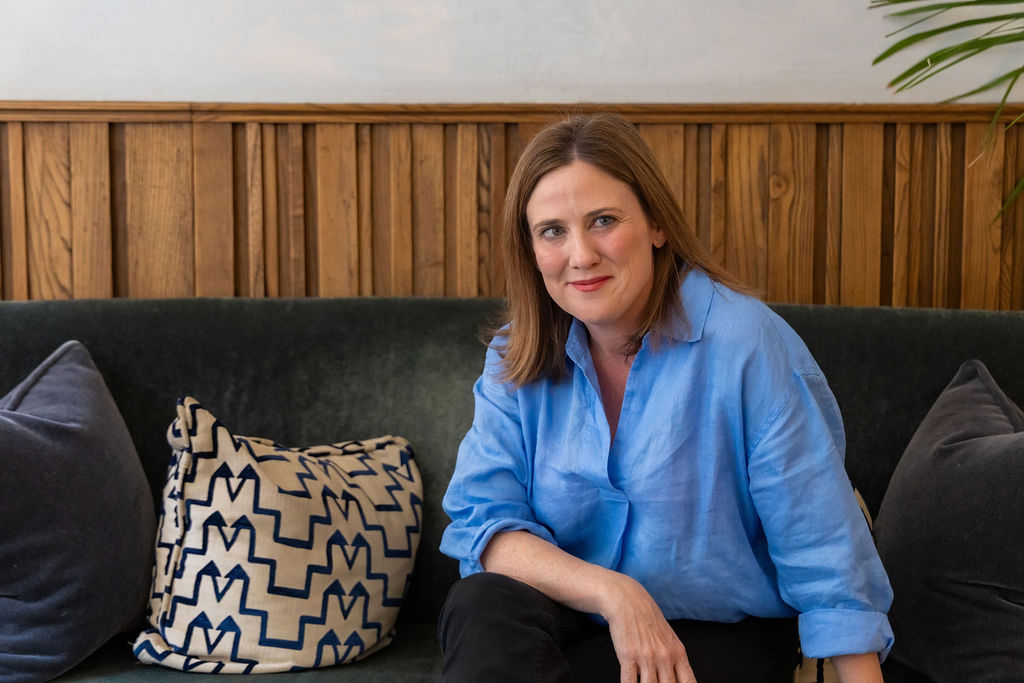
Hearing From: Simone Koo Ishikawa, Consultant in Financial Services & Unlock Her Future Prize Lead at the Bicester Collection


Simone Koo Ishikawa has built a career that spans trading floors, global scale-ups, and impact-driven entrepreneurship. From Goldman Sachs and Morgan Stanley to JP Morgan, OakNorth, and now a portfolio life advising founders and championing women through the Unlock Her Future Prize, her journey has been shaped by pressure, reinvention and a distinctly global outlook.
We sat down with Simone to talk about leadership, confidence, fintech’s role in equity, and why traditional investment banks are still a great place to start a career.
______________________________________________________________________________
You’ve moved between global banks and fast-growth fintechs. What have those high-pressure environments taught you about leadership, and how does that influence the way you help founders today?
I really grew up professionally on trading floors. They’re intense places, especially in your twenties. You learn quickly how to make disciplined decisions, manage high-stakes outcomes, and stay steady when something goes wrong.
Banks aren’t seen as the obvious place to start a career anymore, but I still think they’re a great training ground. You go from the freedom of university to an environment where precision matters more than anything. It’s humbling, but it teaches you what “real work” looks like and how to build resilience.
Moving from JP Morgan to OakNorth was another turning point. JP is huge, almost like its own country, while OakNorth was a few hundred people scaling fast. I had to become much more adaptable. The platform I worked on felt like a startup within a bank, and I learned a lot from the founders about how to launch and position something new.
Today, when I work with founders, I draw on both experiences. From banking, I help them understand how large institutions think and who the real decision-makers are. From OakNorth, I bring a practical playbook mindset - how to set up processes, build a growth function, and structure teams so they can actually scale.
How has your global experience shaped the way you build teams and make decisions?
I’m originally from Asia, grew up in the US, and have lived in the UK for about 20 years. Those cultures shape how I see the world. I’ve also advised and invested in founders across all three regions.
What that teaches you is the value of cultural awareness. If you’re building a headquarter in one place but your team, customers or partners are spread globally, you can’t assume your default way of working will translate everywhere. You need a bit of fluency in how different people think, communicate and make decisions.
With the Unlock Her Future Prize, our work now spans the Middle East, Latin America and South Asia, with the rest of Asia coming next. The differences in startup culture, government support and funding norms are huge. Today, being globally minded is part of building anything resilient.
Through your work teaching, mentoring and building Growth Guild, what have you learned the most about the industry?
It’s given me a renewed appreciation for the art of teaching itself! I’ve always been drawn to it, and I actually thought I’d become a maths teacher at one point, so working with women founders through Growth Guild or at Oxford feels very natural.
I think a lot about the process of teaching and how it best lands with people. For example, if you think about getting your child a music teacher, which of these do you prioritise: someone who is a better musician, or someone who is a better teacher?
9/10 people will agree that a better teacher will shape someone’s learning experience more than a better performer or expert. I think that’s something we should consider carefully when it comes to learning about businesses.
I also think great founders aren’t automatically great teachers. Teaching is its own craft - pacing information, encouraging reflection, helping people digest ideas in a structured way. In my experience, women often benefit from that kind of thoughtful learning environment.
And teaching helps me too. Explaining something clearly forces you to interrogate your own thinking, and that always makes you better at your work.
You advise several impact-focused fintechs. What role should fintech play in building more equitable and sustainable economic systems?
Fintech excites me because it naturally serves the parts of the market that big banks historically overlooked. Large institutions focus on their biggest clients. Fintech gives attention to the long tail - the everyday consumers and small businesses who didn’t previously have good tools.
Many founders I work with are driven by this mission. Illio is a great example; a wealth-tech platform built by a former hedge fund manager who wanted to democratise access to smarter money management.
Fintech also underpins how every modern business operates: expenses, accounting, payroll, payment. If we improve fintech, we improve the day-to-day backbone of entrepreneurship.
On the sustainability side, the questions get more complex. When I ran an ESG thematic ETF at JP Morgan Asset Management, I saw how subjective concepts like “good” and “bad” can be.
Fintech tools that measure carbon footprint, diversity metrics or broader ESG performance help companies understand themselves better, and hold themselves accountable. Fintech should be at the centre of both inclusion and progress.
You’ve built a broad and varied portfolio career. Was that something you planned, or did it evolve over time?
It actually wasn’t planned at all.
I spent my early career in very focused roles, then I stepped away for three years when I had my first three children and genuinely thought I might retrain as a high-school maths teacher.
Then Credit Suisse accepted me into their return-ship programme at the last minute, and the project I landed on looked at diversity on the trading floor. It was a topic I’d wondered about quietly for years, and suddenly I had the data and the permission to explore it. That changed how I thought about what meaningful work could look like.
Later, when I was at JP Morgan, founders and investors started asking me to advise or angel invest. At first it was very instinctive, I’d meet someone brilliant and want to help however I could. But over time I noticed a pattern: I get the most energy from working with founders. So I built my work around that - mentoring, teaching, investing and impact. It might look varied from the outside, but to me it all connects.
What are you most excited about either personally or professionally?
I have a lot to look forward to! For a start I have four children who are all doing very exciting things at the moment, so I’m going to be very involved in their goals and projects next year.
Workwise, I feel very much where I’m meant to be. With the Unlock Her Future Prize, we’ve just announced six incredible winners, and I’ll be meeting with each of them every month throughout next year. I’m excited to be supporting their progress, helping them refine their ideas, and watching their businesses evolve. It’s exactly the kind of work that energises me, and I’m very much looking forward to everything that’s ahead.

.png)