Sharon O'Dea calls Bullshit on International Women's Day

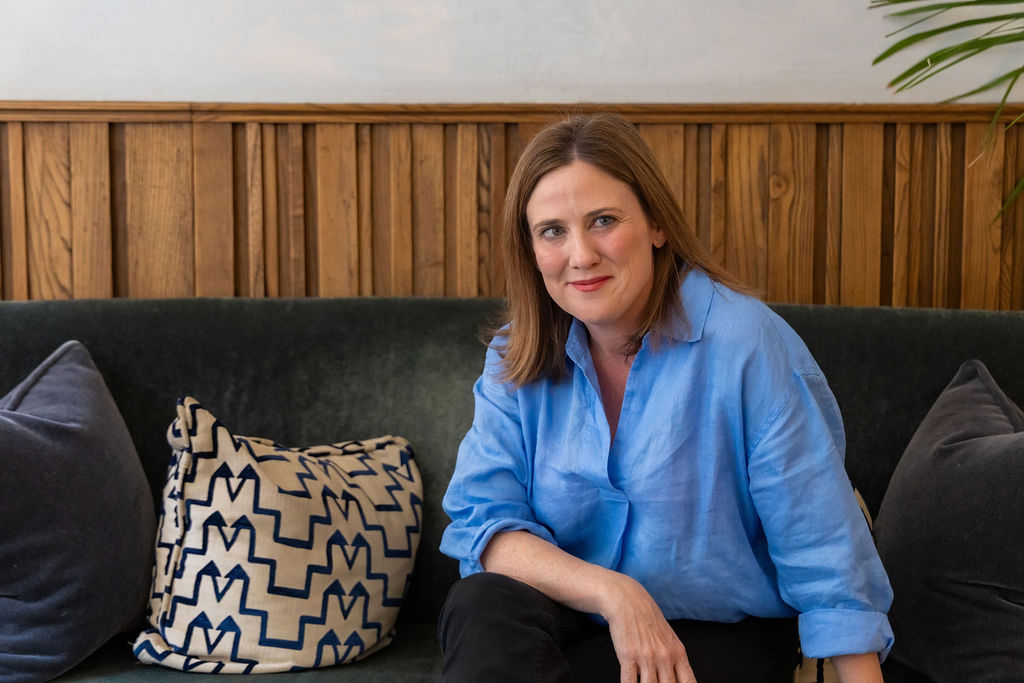
Sharon O’Dea embodies the impossible balance of deeply caring about things, while simultaneously not giving a shit.
A communications leader and author, formerly in senior roles at major financial institutions, O’Dea runs a one-woman campaign every International Women’s Day.
She spends the day responding to companies posting platitudes about women while their internal reality tells a different story.
Starting back in 2020, O’Dea has committed to this every year since. By her own admission this is a privilege that comes from being ‘outside’ of the system, without a boss or employer to tell her off for speaking up.
And while O’Dea only acts only on posts she’s had flagged to her by other people (the overwhelming majority from women), her motivation for this campaign is deeply personal.
“I’ve been on the inside of this. When I was working in a financial organisation years ago I was responsible for putting out the IWD content that said ‘look how much we support women’. Literally days earlier, I’d found out that a man who reported to me, who was junior to me, was being paid £15,000 more than me. And I’m still the one having to publish this stuff.”
The 2026 Campaign
In previous years, O’Dea had relied on DMs, Twitter messages or manually spotting posts. This time, she built a simple anonymous submission form and shared it ahead of International Women’s Day. People could flag companies they wanted her to look at, often alongside a brief note about what had happened internally.
Anonymity was deliberate. “I went out of my way to make sure there was absolutely nothing in it - no tracking, no cookies,” she says. “I don’t need that information. People just need to feel safe using it.”
Behind the scenes, she paired those submissions with publicly available data like gender pay gap reporting, past coverage of discrimination or unequal pay - to build a clearer picture before responding. She received 124 nominations, spanning around ten countries, and submissions came in from The Bill & Melinda Gates Foundation, Barclays, Cap Gemini, and many more
On top of this, O’Dea received a range of messages via the form that didn’t want her to post anything, they simply wanted to vent about their experiences. These cases ranged from women who had been made redundant on maternity leave, all the way to those who had been assaulted at work and not believed.
Why don’t these women raise their frustrations internally?
While there’s some great elements of what O’Dea is doing, there’s an undercurrent of, ‘why is it needed’?
"What really stands out to me is that the women themselves don’t feel they can raise it internally. Not privately and clearly not safely without it being career-limiting. So they go via a third party, for many that’s someone they don’t even know. A complete stranger. That says a lot about how psychologically safe people feel. Because as soon as you raise any of these issues, you’re seen as a troublemaker. “
And in a prime example of the double standards in the industry, one major bank who O’Dea was asked to call out saw two different men in the business take it upon themselves to mansplain the gender pay gap to her in the comments.
“It wasn’t even that they disagreed, it was that they felt perfectly comfortable doing that publicly, on their work page, under their own names. Meanwhile, the women in the organisation didn’t feel they could even raise the issue internally. That contrast tells you everything.”
Does Gender Pay Gap reporting work?
You can’t help but look at this, knowing that gender pay gap reporting has been mandatory since 2017, and wonder if publishing these numbers each year actually has any impact.
If we look at finance, Monzo, Nationwide, Santander and TSB all saw their median hourly pay gap increase year-on-year in 2025.
A House of Commons report showed that the financial and insurance industry has a gender pay gap of 22.3%, the largest of any sector in the British economy…
It’s said that sunlight is the best disinfectant, but shame is clearly not having any effect on the numbers.
As O’Dea reflects: “the question is, where do we go from here? Because it has to be more than just hoping for the best.”
On companies going quiet…
One unpleasant side effect of being called out on their hypocrisy, is that this year it felt far fewer companies bothered to post anything at all. O’Dea agrees that when companies choose not to invite any sort of discussion around this, it’s easy to lose the conversation entirely.
Say what you like about International Women's Day posts, they do offer a trigger for the conversation.
At the end of our chat, I’m forced to ask the question. With everything seemingly going in the wrong direction, and companies increasingly not posting anything at all…Will you keep doing it?
“There was one organisation where someone actually took my post and raised it internally at a town hall. Their leadership acknowledged the criticism, and made genuine efforts to change their way of working. That’s why I still do it, to give people a bit of ammunition to make things better.”
It’s clear to me we cannot simply go quiet when so little progress has been made.
You can find out more about Sharon O’Dea on her website, where you can also learn more about her book “Digital Communications at Work”


.png)